Current state pains and barriers
Pains
Barriers
Overview
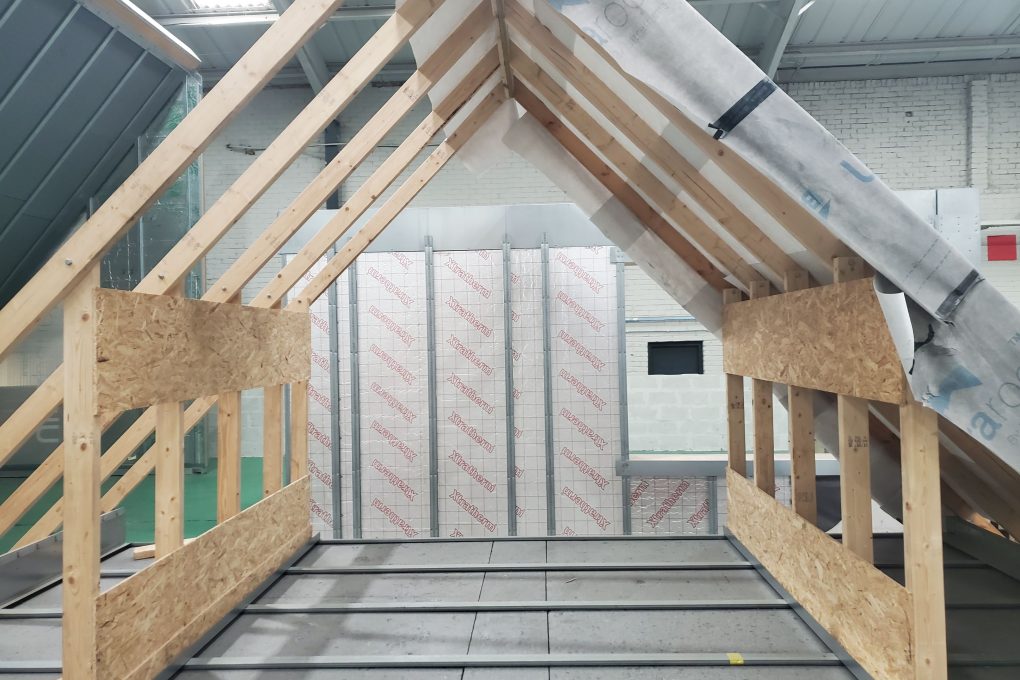
Tolerances in building construction and retrofit refer to the permissible limits of variability of physical dimensions, material properties, and process accuracy. They ensure that components fit together and meet functional performance requirements.

Tolerance Management ensures components fit together as intended, accounting for variations in the manufacturing process of components / parts, and the “tolerance stack” (i.e. the cumulative effect of the tolerances when assembling multiple interfacing parts).
Controlling tolerances is key to building a quality product, avoiding on site snags, and ensuring performance within complex and interconnected systems, particularly with load bearing components like some EWI solutions.
Due to the nature of retrofit and the ambition of reaching interoperable kits-of-parts for mass customisation at scale, control of tolerances is critical to achieve interoperability of different products.
Unlike new builds, existing structures may be out of plumb, misaligned, or degraded. Interface elements such as mechanical fixings, bracket systems, and modular tie-ins must accommodate ±15–20 mm vertical and horizontal deviations, which are typical in retrofit conditions.
Installation teams need flexibility in component design and site detailing to accommodate real-world conditions. Logistics planning must incorporate site surveys, tolerance mapping (a systematic method for representing and managing dimensional and positional tolerances), and contingency allowances to avoid delays due to unexpected dimensional discrepancies.
Current state
Within traditional construction, tolerance issues are mitigated piece-by-piece, as there are opportunities to control them as the retrofit system is built up.
- If approached correctly, this method can result in high quality products. However, it is time intensive and relies upon highly skilled and experienced installers.
- If approached incorrectly this can lead to non-compliance and poor-quality retrofit.
Offsite manufactured products require certain tolerances to ensure cohesive assembly. When they are not met, progress can be slowed.
- Site preparation and understanding is often key. If dimensions that manufacturers produce don’t align with reality when parts are delivered to site, significant rework may be required.
Tolerance management is often reactive rather than proactive.
- Tolerance requirements are not always identified early in a project lifecycle.
- Tolerance management is not always integrated into the planning of a project, whether in design, offsite assembly, or onsite planning.
- Communication of tolerance information among all stakeholders can be limited, potentially passing tolerance issues down the value chain.
- Quality Assurance / Quality Control methods and systems are often lacking. This includes documenting lessons learned or applying tolerances to technical drawings, impact assessments of tolerance noncompliance, and conducting root cause analysis of the causes of tolerance noncompliance.
Future state
The ideal future state of tolerance management is to achieve tighter tolerances by Manufacturing-Led methods. The future state of tolerance management should include flexible design that accommodates geometric and dimensional discrepancies.
- In keeping with the “systems thinking” approach – which is key to Manufacturing-Led retrofit tolerances in offsite construction – projects should adopt strategies to predict, monitor and correct where necessary. This will allow a virtuous cycle of continual improvement as more projects are delivered.
- Identification of the tolerance requirements and risks associated from nonconformity allow effective planning to mitigate risks.
- Communication of mitigation plans through unified reporting and visual aids to all relevant stakeholders allow the plans to be widely understood and applied.
- Control measures not only mitigate risk of tolerance issues but should also close the feedback loop to document the results of compliance control to continually improve the design and retrofit process.
Getting from here to there
Questions
- Can tolerance management be built into the design phase of retrofit products?
- Can a kit-of-parts approach enable a more holistic understanding of tolerances and how they impact component interfaces?
Enablers
- Better digital design solutions to enable a systems level approach to tolerance management vs siloed analysis of single products / measures.
- Manufacturing-led approach to retrofit.
Key insights
- Tolerance management planning can reduce reliance on skilled labour mitigating tolerance issues as they arise on site.
Guidelines
Rules
- Predefined strategy to manage tolerance issues at the design phase.
- Standard Operating Procedure (SOP) for dealing with tolerances on site.
- Ensure that tolerance management strategies are clearly communicated from inception to completion.
- Ensure accurately placed datums from which to measure during surveys.