Retrofit Rulebook contents
What’s most relevant to me?
We’ve identified the following six key audiences as those that should gain the most benefit from the Rulebook.
- Suppliers
You’ll likely find most of the Rulebook useful, especially Section 2: Interoperability rules and standard detailing and Section 3: Demand > Develop > Deploy framework. - Construction sector e.g. contractors, architects and designers
You’ll likely find most of the Rulebook useful, especially Section 2: Interoperability rules and standard detailing and Section 3: Demand > Develop > Deploy framework. - Industry bodies
You’ll likely find most of the Rulebook useful, especially Section 2: Interoperability rules and standard detailing and Section 3: Demand > Develop > Deploy framework. - Social housing landlords
You’ll likely find the Section 3: Demand > Develop > Deploy most useful. - Financiers and funders
You’ll likely find the Section 3: Demand > Develop > Deploy most useful. - Policymakers
You’ll likely find most of the Rulebook useful, especially Section 2: Interoperability rules and standard detailing and Section 3: Demand > Develop > Deploy framework.
Let’s transform retrofit – together

This is the moment to choose collaboration. Let’s commit to making it a reality – because with it, we have a real chance of unlocking retrofit at the scale and speed our net-zero goals require.”
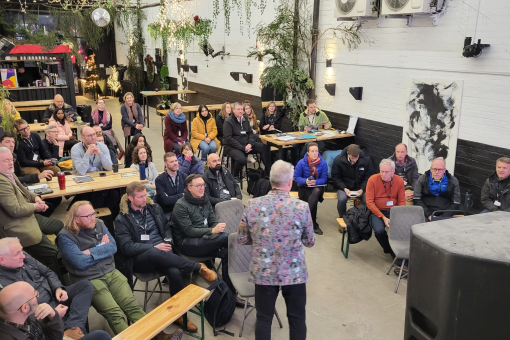
Retrofit is what is known as a ‘wicked problem’ – one with multiple stakeholders, no clear-cut answers and layer upon layer of complexity. The only way to deal with these is to have a collaborative, community-based approach.
Transform-ER has brought together the range of expertise needed to design a new delivery model to tackle the retrofit challenge. But for large-scale adoption, we need other communities to embrace our shared mission and develop it further.
Please use our guidance to support your projects and get in touch if you have insights and case studies to share with us.