
Blog8th April 2025
Transform-ER emerged from an Innovate UK funded project that ran from 2024 to 2026 – designed to rethink retrofit with a systemic approach. During our project tenure, we ran a blog series introducing our tactical team of 13 partners.
Now we have launched as a CIC with four founding members from the original consortium – offering an integrated retrofit delivery model for social landlords and local authorities.
So, we’re refreshing and resharing these Q&As so you can learn more about the thinking behind the model and how we’re collaborating to enable a sector that can deliver 1m home energy upgrades a year by 2030.
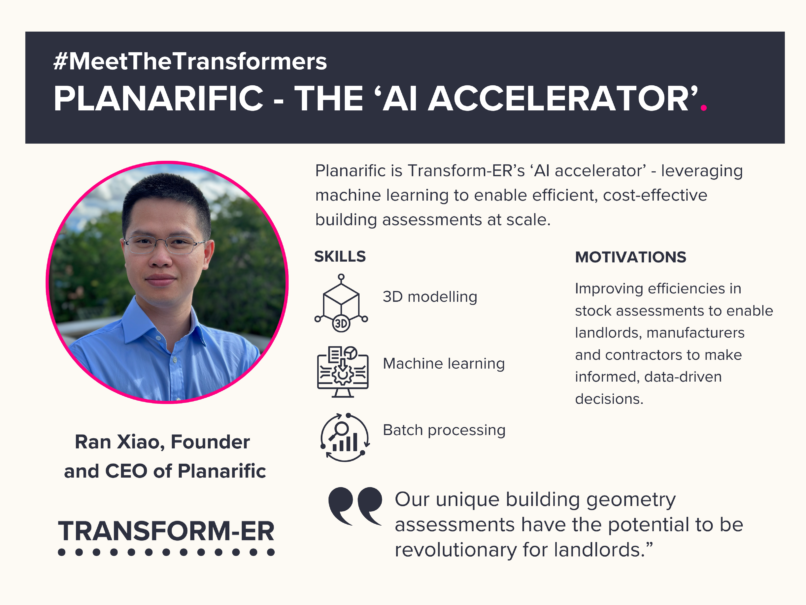
Here’s our conversation with Ran Xiao, founder and CEO of Planarific sharing how the team is using AI, imagery and 3D modelling to improve building stock insight.
Tell me a bit about your organisation and why you’re involved in Transform-ER?
Planarific is an AI-driven software company creating spatial intelligence for sustainable home improvement.
Our team transforms imagery from drones and other sources into semantically enriched 3D geometric models for thousands of homes at a time. The output includes metadata and labels attached to each 3D model, differentiating key parts of the building such as roofs, walls, windows and doors, together with their measurements.
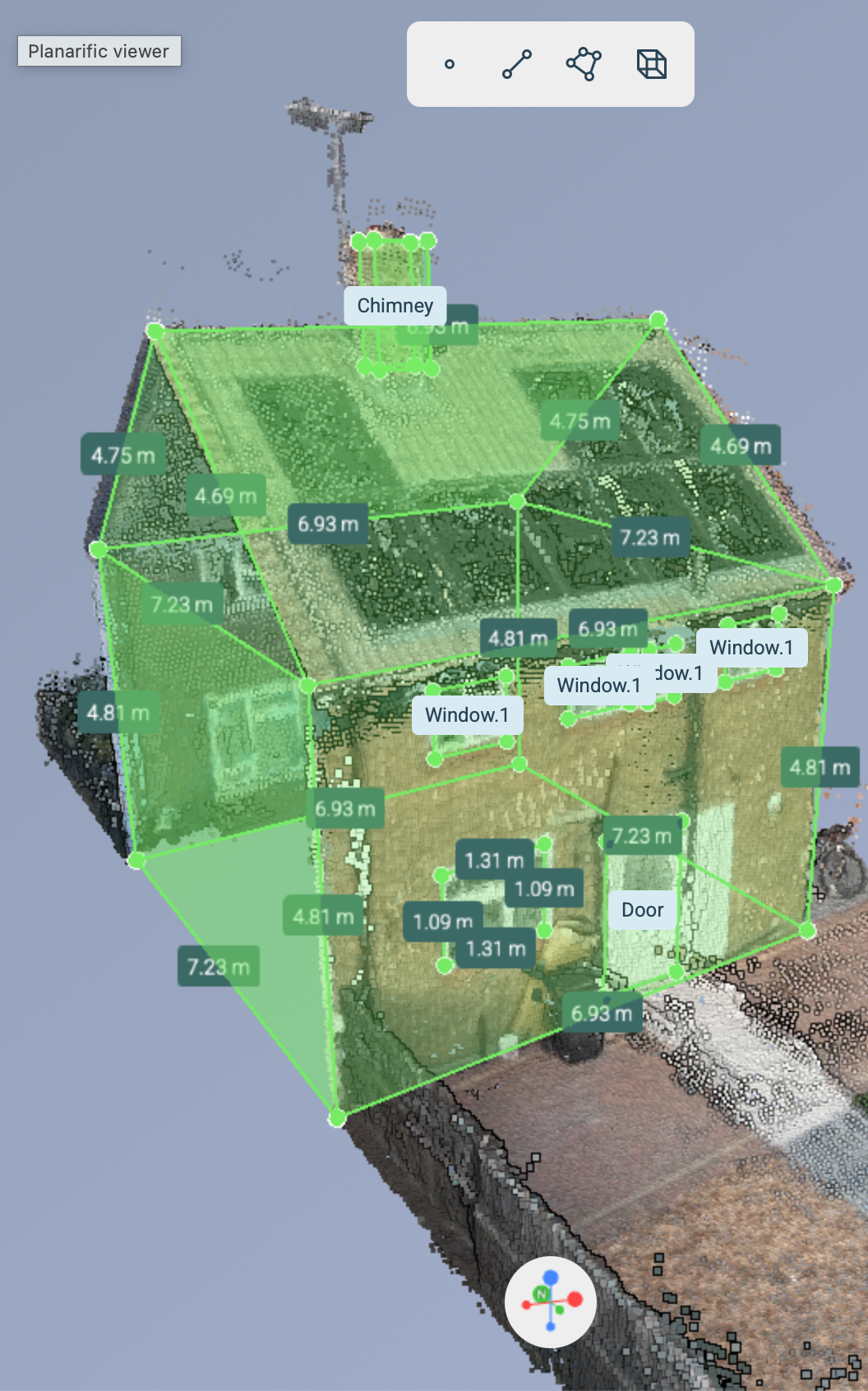
The imagery also provides a visual record of external condition, supports monitoring over time, and can give landlords consistent coverage of their properties without disrupting residents.
The important point is that the same digital survey can support several different uses. A housing provider does not need to start from scratch each time it wants to review a property, plan a retrofit measure, assess a roof, understand solar potential or look at wider asset priorities.
We combine architectural insight with machine learning to provide analytics that help landlords, designers, manufacturers and contractors plan retrofit, understand external condition, reduce risk and make better portfolio decisions.
Our involvement in Transform-ER is driven by the desire to improve efficiency and achieve economies of scale in retrofit.
There are thousands of similar housing typologies across individual portfolios and across the country. I was attracted to solving a problem that repeats at scale, because that is what retrofit needs.
As a trained architect, I’m also interested in how human designers interact with automated systems. My PhD focused on applying machine learning to architectural design, and my belief is that this interaction between human expertise and technology is very important.
There are 1000s of the same typologies across the country and I was attracted to solving a problem for something that repeats a lot.
Transform-ER is tackling the big barriers to scaling up retrofit – can you explain why you think portfolio assessment at scale is such important lever for change?
The UK needs to retrofit millions of homes, but the process remains slow, expensive and fragmented. One of the biggest barriers is the lack of consistent, property-level data for assessing building stock efficiently and accurately. There is often a gap between what is physically present on a property and what a spreadsheet or asset system says is there.
Our original work package focused on overcoming this by identifying architectural repetitions and key property differences across portfolios. That enables more batch processing, rather than treating every home as a one-off assessment. It also provides a deeper and more accurate understanding of each individual property, including additions and variations that may affect delivery.
We have worked closely with our partners to integrate our rich visual and geometric data into the Transform-ER digital tools, helping landlords, manufacturers and contractors make more informed, data-driven decisions. This can help create the market, demonstrate volume and remove bottlenecks. It also means there are fewer surprises when teams arrive on site.
We are also bringing together available property data and combining it with our insight into the geometry and visual features of a building. For landlords, that creates a much richer evidence base for planning and delivery.
We call it spatial intelligence.
What’s Planarific’s focus over the next few months and how will this help achieve Transform-ER’s mission?
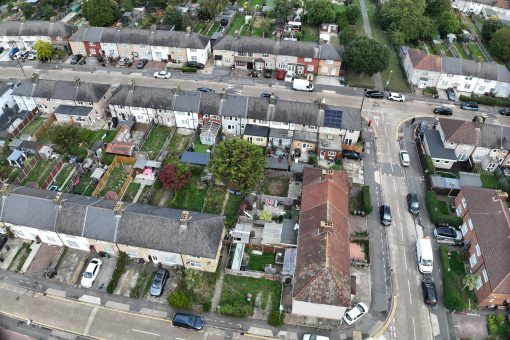
Through Transform-ER, we have tested and enhanced how drone and image data can be collected and processed at neighbourhood scale, including work across the Becontree Estate in the London Borough of Barking & Dagenham. This has helped us develop a more structured approach to data collection logistics and understand how the outputs can support wider programme planning.
We are now applying those learnings across larger areas and different housing typologies. The technology can support a wider range of retrofit and asset management decisions, while giving landlords a visual understanding of each property across a portfolio.
That matters because retrofit is rarely a single decision. The same home may need to be considered for fabric measures, roof condition, solar PV, ventilation, repairs, resident engagement and future maintenance. Having a reusable property-level record gives teams a better starting point.
What’s interesting about developing software is that it’s an iterative process. You never really finish; you keep learning, improving and making the product better for the customer.
What lessons have you learned so far?
Even though we’re a technology-focused company, we can clearly see that retrofit is ultimately about people and homes, not just data. For example, with drone surveys it was important to communicate clearly with the community about what we were doing and why. We are continuously learning about how our operations, as well as the retrofit process itself, affect the people living in the homes.
We have also developed a clearer view of how spatial intelligence can support a wider range of services, including community energy projects, accurate solar PV assessment for every home and, potentially, identifying infill opportunities to create new homes.
It is also important for us, as a company developing AI systems, that our outputs can be trusted and verified. To achieve this, we integrate a mechanism called ‘human-in-the-loop’, which gives the human expert the ability to verify or challenge a decision.
AI should not remove expert judgement. It should make that judgement more scalable, consistent and better informed. As I mentioned earlier, the interface between human and computer is very important and must enable this feedback flow, especially in construction. In practice, this means designing software that presents information in a way that allows the human expert to carry out checks and make informed decisions.
Finally, what’s your call to action for the market?
For housing associations, local authorities and landlords to invest in better property-level data now, so they can make better retrofit, repairs and asset decisions over the long term.
That means spending time and money collecting better data today, and then continuing to use that data in ways that can reduce operational costs across retrofit, maintenance and repairs.
For example, we already know that emergency repairs and their associated costs can erode budgets that might otherwise be used to retrofit or improve homes. Spatial intelligence can help identify issues earlier by capturing roof and external condition as part of the same data collection process.
This is not about replacing specialist surveys, retrofit coordination, technical design or contractor expertise. It is about giving those teams a better starting point: a consistent, visual and measurable understanding of the homes they are working with.
When you can do this across thousands of properties, the ability to understand, prioritise and act across a whole portfolio becomes much more realistic.
So future-proofing your data becomes part of future-proofing your homes.
Find out more about Planarific.
This blog was originally published on Energiesprong UK’s website on 8 April 2025.