
News16th October 2025
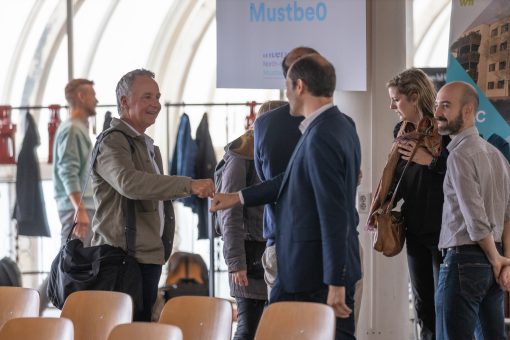
Our consortium-led Transform-ER project recognises that cross-sector collaboration is critical to catalysing home energy upgrades at scale. Energiesprong UK’s culture change lead Stéphanie Ah Tchou explores how its new toolkit is jam-packed with practical ways to align teams, navigate complexity and build trust.
Placing collaboration at the heart of the retrofit revolution
Two years ago, Innovate UK brought together 40 organisations to create game-changing ideas to speed up the roll-out of decarbonised heat for buildings.
From this intensive workshop emerged Transform-ER: a consortium of 13 industry experts with one mission: to create the systemic change needed to enable a retrofit industry that can deliver 1m home energy upgrades every year by 2030. This included a focus on prototyping products and kits-of-parts and developing new digital pipeline assessment tools and finance mechanisms.
But at its heart was an understanding that retrofit at scale requires fundamental cultural change. Our combined experience had taught us that technical solutions fail without strong partnerships, financial models collapse when organisations can’t align interests, and projects stall without trust and shared purpose.
Why relationships matter in retrofit
Combining in-depth industry research and learning from case studies (including Heathrow T5) and wider investigations into successful approaches for nurturing collaboration showed us that projects succeed when teams:
✓ Build trust early and maintain it
✓ Share risks and rewards transparently
✓ Engage all stakeholders meaningfully
✓ Focus on solutions, not blame.
Additionally, our sector-wide questionnaire found that – while technical competency is important – people emphasised that relational factors, like empathy, integrity, and shared goals, are crucial for fostering successful partnerships. And this requires finding ways to work together that nurture these factors.

Why we’re championing an alliancing approach
And that’s why – at its core – Transform-ER’s new model for delivering retrofit will use alliancing – a partnering approach where organisations share risks, rewards, and decision-making to drive down costs and improve delivery certainty.
This requires more than contractual agreements; it demands cultural change that builds trust, aligns values, and sustains cooperation throughout complex projects.
So, we’ve developed a framework and toolkit to support this cultural transformation – and are sharing it more widely to help other retrofit project teams navigate complexity, build trust, and adopt collaborative mindsets.
Creating a toolkit for change
The toolkit has two parts:
• First, our collaboration framework which outlines the key components of our approach, including highlights from our research.
• Second, a four-phase culture change approach from initial alignment through to ongoing cooperation. Each phase offers practical tools for key challenges.
This toolkit recognises collaboration not as a fixed state but as a dynamic process, one that evolves over time, shaped by relationships, and real-world pressures. It provides practical, adaptable tools for each stage of a project, helping teams lay strong foundations, navigate tension, and sustain trust over time.
Crucially, it also helps make the invisible visible: the values, behaviours, and communication patterns that often determine whether true collaboration can emerge.
A taster of the tools
Tool #3 (Phase 1: Awareness and engagement)
Tool #4 (Phase 2: Collaboration kick-off)
Tool #11 (Phase 3: Navigating challenges – together)
Tool #12 (Phase 4: Sustaining collaboration – together)
Let’s transform retrofit – together
This blog was originally shared on Energiesprong UK’s website on 16 October 2025.