
17th March 2026
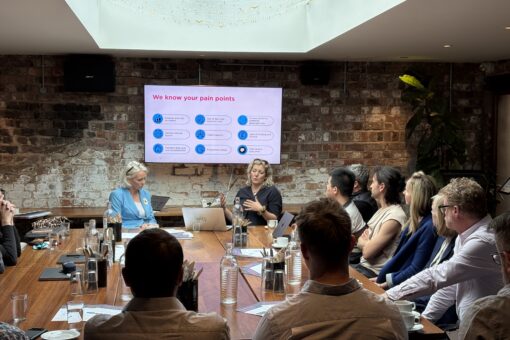
When we set about our work to rethink retrofit and tackle its biggest barriers, we knew we had to speak to the people on the frontlines – landlords, suppliers and residents.
Through our in-depth stakeholder engagement, we asked them what their current pain points were, and what they needed from a better future. This helped us create clear user stories for all our stakeholders. You will see some of these as you read through this blog.
And a clear pattern emerged: the same underlying issues are creating problems for everyone. Retrofit’s barriers to scale aren’t isolated operational challenges – they’re symptoms of systemic fragmentation.
When landlords struggle with data quality, manufacturers can’t plan production. When residents experience poor communication, installers face higher drop-out rates. When procurement frameworks don’t enable collaboration, everyone carries more risk.
These big five challenges include: a lack of long-term pipelines, substandard data quality, inadequate resident engagement, weak business cases and poor collaboration. But they are also opportunities – critical intervention points that, when tackled together, can create a more integrated retrofit system.
1. Rethinking resident engagement
What our stakeholder engagement shows: Residents are confused and frustrated. Landlords face high refusal rates which equals programme delays and abortive costs. Installers don’t understand why tenants are so upset about new technologies in their homes.
Resident engagement isn’t just a landlord problem or a user experience issue – it’s a system-wide bottleneck. Current approaches treat engagement as a separate workstream, usually handled late in the process by landlord teams or subcontracted separately.
An alternative approach: Engagement must be integrated throughout – identifying resident needs early on, designing in opportunities for residents to have their say, and valuing feedback beyond project end. Landlords reported drop-out rates of 20-50% – this isn’t inevitable; it’s the result of treating engagement as an add-on rather than a core process.
As a housing provider, I need confidence that we can deliver energy upgrades for our tenants as quickly as possible and in a way that they feel consulted, empowered and confident to manage their homes going forward.
2. Improving data quality
What our stakeholder engagement shows: Landlords are making multi-million pound decisions based on uncertain information. Manufacturers can’t cost accurately or plan production without property intelligence. Residents are fed up of multiple surveys.
Poor data quality cascades through the entire system, multiplying costs and risk at every stage. One landlord’s data problem becomes the designer’s redesign problem, which becomes the manufacturer’s production problem, which becomes the installer’s site problem, which becomes the resident’s disruption problem.
Building programmes based on this poor data increases delays and results in investment – including grant funding – not being successfully deployed.
An alternative approach: Current approaches treat data gathering as a one-off exercise at project start. But data needs to flow continuously: from portfolio analysis, through assessment and design, into delivery, and back through post-occupancy monitoring – with each stage adding detail and validation. Without this flow, properties drop out after assessments and cost uncertainty remains high.
As a landlord, I need validated, high‑quality property data so that I can make accurate, confident investment and sequencing decisions.
3. Supporting the supply chain
What our stakeholder engagement shows: Landlords argue the supply chain is immature and contractors require hand-holding. Suppliers and manufacturers say they haven’t had enough long-term demand to invest in skills and manufacturing capabilities. Residents hear of poor-quality work and worry about outcomes.
The sector can’t scale without confident supply chains that have the certainty to invest in skills and capacity, with innovation pathways and continuous improvement cycles where learning feeds back into practice rather than being lost between projects.
Procurement is also an enormous challenge. The average bids costs in 2014 were calculated at £60k for contractors and £24k for consultants. And because there are so many overlapping frameworks covering the same work, they must bid repeatedly.
An alternative approach: Current stop-start, project-by-project approaches prevent this investment. Without pipeline certainty, installers can’t train workforces. Without proven demand, manufacturers can’t develop products. Without feedback loops, mistakes repeat across programmes. Without collaborative models, learning stays siloed. Scaling requires infrastructure: standardised solutions that can be refined, consistent pipelines enabling workforce development, and knowledge management capturing what works.
As a supplier, I need clearer, aggregated demand signals so that I can justify investment, achieve economies of scale, and drive down unit costs.
4. Nurturing collaboration
What our stakeholder engagement shows: Landlords complain they are holding all the risk. Supply chain SMEs talk of unfair treatment, late payments and their contributions remaining unrecognised – or worse, co-opted by bigger players. Residents bear the brunt of poorly managed project relationships when communication breaks down.
The way we currently manage construction projects evolved for new build construction with controlled conditions and standardised designs. Retrofit requires different approaches: properties vary, residents are in situ, and success depends on problem-solving throughout delivery.
An alternative approach: Alliancing and collaborative models offer a positive alternative – where risk and reward are genuinely shared, incentives align to outcomes, and relationships are designed for partnership rather than claims management. When each party optimises for their own risk rather than system-wide outcomes, everyone loses.
As a supplier, I need to feel confident that we can create truly collaborative partnerships so that, as a sector, we can create a viable retrofit ecosystem where risks and savings are shared
5. Building better business cases
What our stakeholder engagement shows: Landlords must demonstrate value for money to internal executives – and fill a ginormous funding gap. Manufacturers need long-term pipelines to invest in the skills and technologies to deliver retrofit at scale. All residents deserve access to retrofit schemes – not just those in homes easiest to retrofit.
An alternative approach: Part of this is about finding the right finance mechanisms, which is critical to unlocking retrofit at scale. But building better business cases also hinges on getting the points above right too. Without good resident engagement, improved data, high-quality solutions and a thriving, collaborative retrofit ecosystem, we will always be subject to cost uncertainty and poor programme viability.
As a finance provider, I need the retrofit sector to commit to large-scale, long-term programmes to show investors that retrofit is an attractive investment that can be trusted to lead to good outcomes for the home, its tenants, and the environment.
Why integration matters
The pain points landlords, suppliers and residents experience don’t exist in isolation. They’re symptoms of a fragmented delivery system where each phase – data analysis, design, procurement, delivery, resident engagement – operates independently, with different parties holding different pieces of the puzzle.
What emerges clearly from Transform-ER’s research is that these are integration problems. Landlords need cost certainty, streamlined procurement, better resident engagement, and data-driven insights. Suppliers need consistent pipelines, fair risk-sharing, and routes to market for innovation. Residents need choice, trust, and seamless delivery.
No single party can solve these problems alone because they sit between parties, not within them. The way we currently do things, designed around transactional relationships and linear handoffs, actually reinforces fragmentation rather than resolving it.
And that’s why Transform-ER’s integrated retrofit delivery model brings together five core elements:
- Aggregated data for pipeline planning
- Standardised kits-of-parts solutions with local adaptation
- Collaborative alliancing and streamlined procurement
- Resident engagement as core process, not an add-on
- Iterative innovation and improvement
When these elements work together, they address the root causes of fragmentation rather than just treating the symptoms.